Stewardship in Oaxaca: What Agave Fields and Prescott College Taught Me About Leadership
Blog written by Jason Mitzen, current graduate student at Prescott College.
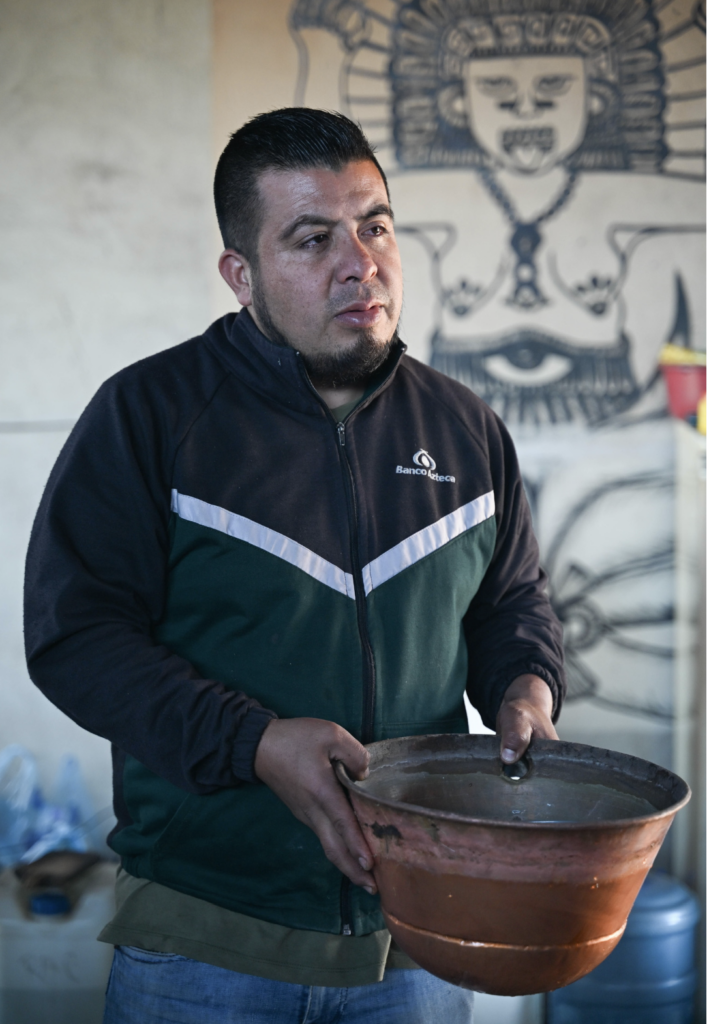
Our group walked into Ronaldo Angeles‘ palenque (a place where mezcal is fabricated), and the smell of fermenting agave filled the air. Ronaldo was finishing the first of two distillations in ollas de barro (clay pot stills). While most modern spirits are distilled in stainless steel column stills or copper pot stills, in the town of Santa Catarina Minas, this labor intensive method of distillation is still practiced.
Photo below: Ronaldo Angelés of Ancestral (Photo by Anna Bruce)
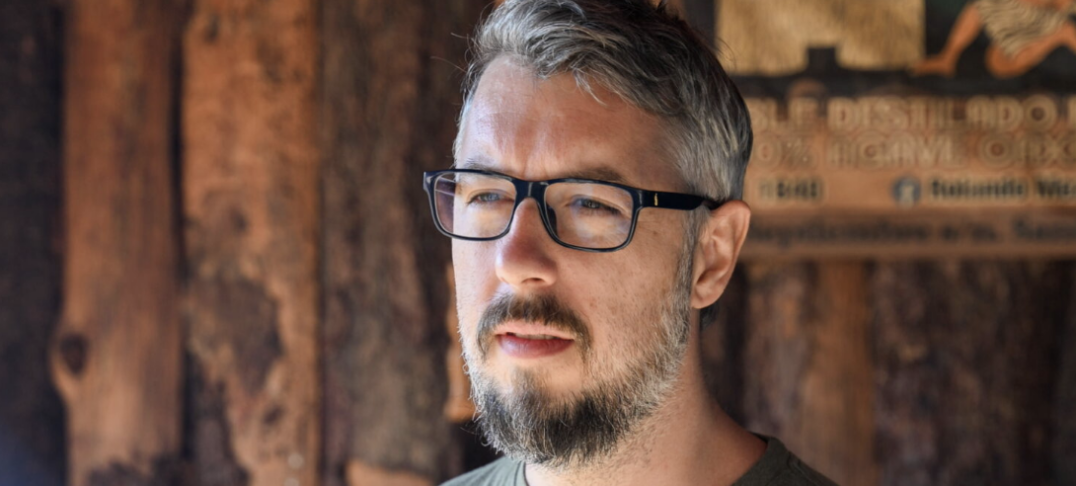
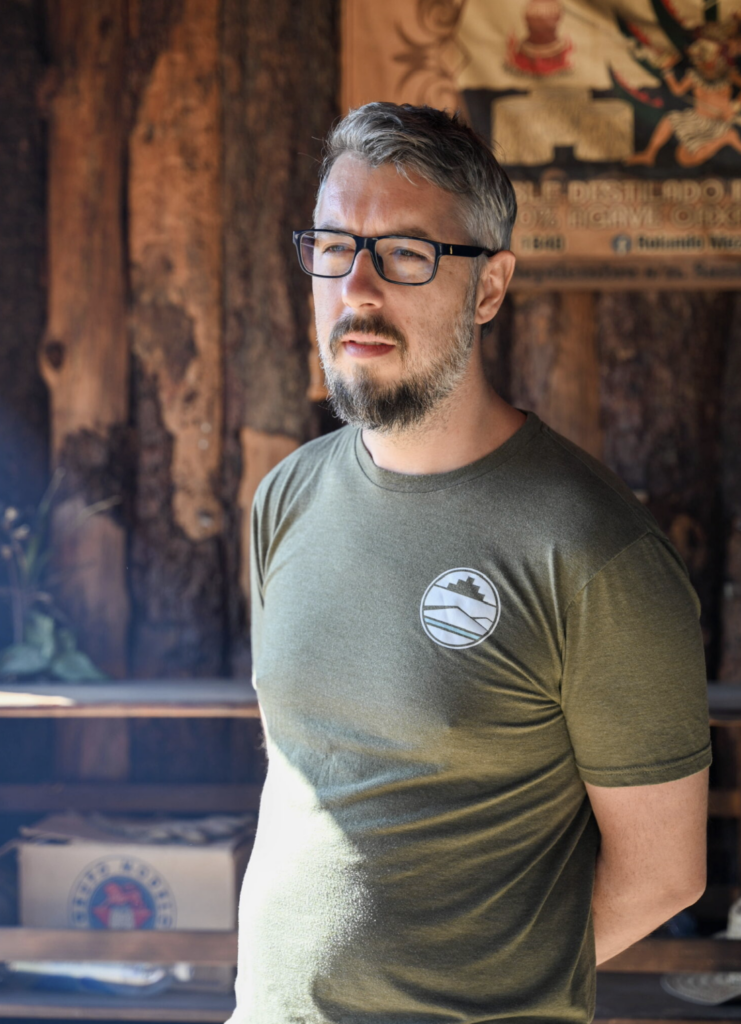
Our group consists of eight mezcal enthusiasts, five of which are completing their capstone course in the Master Mezcalier program. This course is taught through Master Mezcalier USA, a US offshoot of the original program created in Mexico in 2009. After many years of owning a mezcal focused bar in New Orleans, the author brought the Master Mezcalier program to the English speakers and has been teaching courses for over 2 years. This is the first Level IV capstone course to be offered to date. In addition to being the current owner and administrator of this program, he is a student in the Sustainable Leadership and Management graduate program at Prescott College.
Photo below: Jason Mitzen (Photo by Anna Bruce)
The aim of the Master Mezcalier program is to impart students with knowledge and appreciation of mezcal and agave spirits, as well as create lifelong stewards and students of mezcal. This includes not only basic knowledge of denomination of origin and the origin plant itself, but also the culture and tradition of the people who work with agave. The purpose of the capstone course is to allow students to immerse themselves in the culture and labor of fabricating agave spirits.
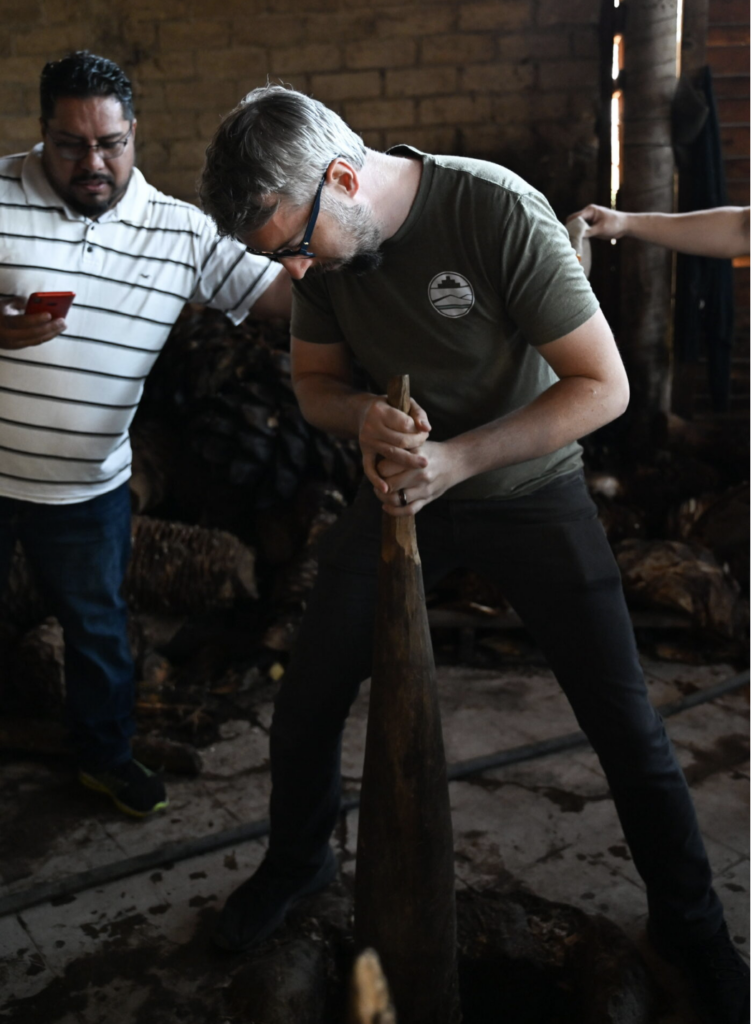
This capstone course is the reason that our group is in visiting Ronaldo in Santa Catarina Minas. The only way to accomplish our goal of becoming a true Master Mezcalier is to travel to Oaxaca, Mexico (the center of mezcal production) and learn from the masters themselves, as well as take part in some of the labor involved with the production of the spirit that we love and admire. Ronaldo explains that they allow some agave to come to flower instead of harvesting all of them in order to ensure genetic diversity in the field, a sustainable practice which is second nature for the people living here. After the explanation, Ronaldo quickly puts us to work in his palenque: crushing agave fibers with a mazo (a wooden club), cleaning dirty condenser pans, and transferring bagazo (used agave fibers) from a fermentation vat into a still.
Photo below: Milling Agave at Ancestral Palenque in Santa Catarina Minas (Photo by Anna Bruce)
After leaving Ronaldo’s palenque we visit palenque “El Torito” where maestra mezcalera Angélica García Vázquez supervises the production of many mezcals made from different varieties of agave. We sample various expressions of Espadín, Cuishe, Jabalí, and Pechuga (a type of mezcal distilled with chicken breast, amongst other ingredients).
Photo below: Maestro Mezcalera Angélica García Vázquez (Photo by Anna Bruce)
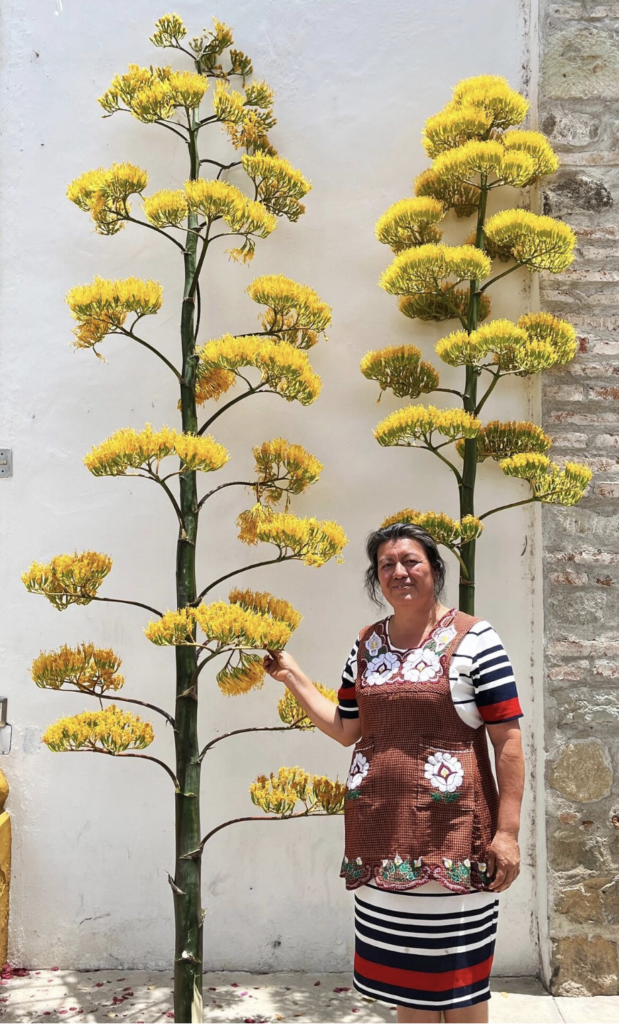
Angélica is a third generation producer of mezcal in the town of San Baltazar Chichicápam. After her husband passed, Angélica took over running the palenque, becoming a producer in an industry that is generally dominated by men. Although Angélica was intimately familiar with the mezcal production process, running the palenque was still a formidable challenge. As with many women in the industry, she would face criticism from her contemporaries, male and female alike. Despite the challenges, the brands produced at this palenque have experienced growth and success. Angélica is currently the head of the collective Mujeres de Mezcal (Women of Mezcal) in Oaxaca.
In the mezcal world, sustainability is a way of life and part of the indigenous Zapotec culture. Many people have been practicing sustainable farming and waste recycling as a means to survive, while it’s something that’s perhaps not so ingrained in modern US society. At Angélica’s palenque they recycle viñaza (the liquid waste that remains after distillation) via a bio digester to make gas for cooking.
As I reflect on our group’s time at the palenques in Oaxaca, my time at Prescott College in the sustainable leadership program feels synergistic with the ancient Zapotec knowledge of the mezcalero(a)s. My studies have taught me that leadership isn’t just about leading, it’s about stewardship of culture, people, and resources. The future of the mezcal industry relies on our ability to protect it’s past and to respect the wisdom of those who have worked these fields for generations. My group left Oaxaca, not just as certified Mezcaliers, but as stewards of a wholly unique culture and tradition.
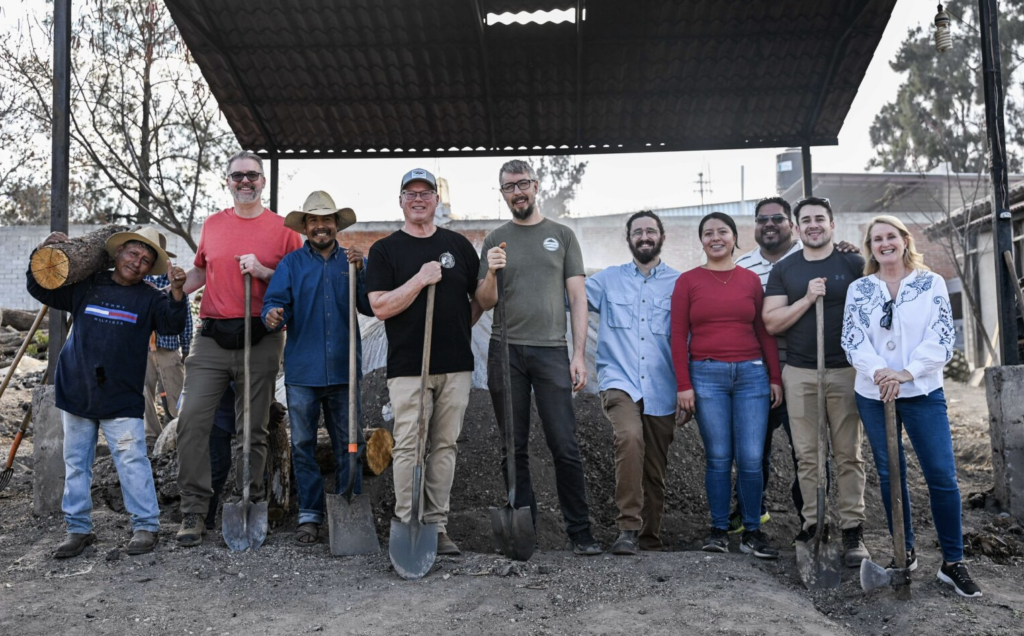
Photo below: The first students to graduate through the Master Mezcalier USA program (Photo by Anna Bruce)