Foundations of Community Journalism
Why this program?
The Foundations in Community Journalism microcredential invites participants into the practice of journalism as a tool for collective power, resilience, and accountability. Through four interconnected, experiential workshops, students will gain both a grounding in the values of community journalism and practical skills they can immediately apply. Together, we will explore what makes community journalism distinct from legacy models and how it overlaps with community organizing. Students will learn why authentic, trust-based relationships are central to ethical reporting, and they will practice strategies for showing up within communities with transparency, humility, and care. Participants will sharpen their ability to ask strong, open-ended questions—cultivating curiosity, cultural awareness, and active listening as cornerstones of ethical storytelling. Finally, students will step behind the scenes of the full journalistic process, moving from idea to impact while reflecting on the rights and responsibilities of both journalists and news consumers. By the end of this program, students will leave with a holistic understanding of community journalism: its principles, practices, and potential to create meaningful stories that are accurate, ethical, and rooted in community trust.
What will this program look like?
To successfully complete the pathway and earn the Foundations in Community Journalism badge, participants must:
- Engage with all four modules by completing required readings, videos, and non-lecture learning resources.
- Submit one artifact per module (e.g., a short written response, audio/video reflection, or activity worksheet) demonstrating engagement with key concepts:
- Module 1: Reflection on how community journalism differs from legacy journalism.
- Module 2: Example of a relationship-building strategy or community map.
- Module 3: A set of open-ended, intentional interview questions.
- Module 4: A brief outline of a story idea following the journalistic process.
- Participate in at least two cohort-based discussions (online discussion prompts, peer feedback, or synchronous conversations).
- Complete a final capstone reflection (2–3 pages or a short multimedia submission) synthesizing learning across all modules. The capstone must demonstrate:
- Understanding of the historical roots and purposes of community journalism.
- Application of relationship-building and ethical accountability strategies.
- Ability to craft effective, curiosity-driven questions.
- Familiarity with the journalistic process from idea to public engagement.
Key Program Information
Delivery Method
Online
Fees
PC Students and Alumni: $450
General Public Students: $550
Schedule
May 4-22, 2026
Program Details
Pathway Learning Outcomes
- Participants will understand how community journalism differs from legacy journalism and why trust-based, hyperlocal reporting matters.
- Participants will explore strategies for building authentic, accountable relationships across differences with transparency and care.
- Participants will develop skills for crafting intentional, open-ended questions and practicing active listening as the foundation for ethical storytelling.
- Participants will gain familiarity with the full journalistic process—from pitching and research to writing, editing, and public engagement—through a community-centered lens.
Module-Specific Learning Outcomes
Foundations for new practitioners or community members – participants would complete all four modules/trainings
- History, Practices, and Purposes of Community Journalism – 3-5 hours
- Participants will understand the ways in which community journalism differs from mainstream/legacy journalism
- Participants will understand the historical roots of community journalism particularly as it applies to marginalized communities
- Participants will begin applying their learning to the core tenets of community journalism: relationship building, intentional listening, curiosity about place, and social justice
- Community Journalism: Relationship-Building – 3-5 hours
- Participants will understand why trust-based, authentic relationships are foundational to ethical and effective community journalism.
- Participants will explore strategies for building relationships across differences, including practices of transparency, consistency, and cultural humility.
- Participants will begin applying approaches for navigating harm, accountability, and repair in their reporting through scenarios and reflective practice
- Community Journalism: Developing Questions – 3-5 hours
- Participants will understand how the framing and delivery of questions shape the stories, truths, and relationships at the core of community journalism.
- Participants will explore best practices for crafting open-ended, intentional questions that are rooted in curiosity, preparation, and cultural humility.
- Participants will begin applying active listening and trust-building techniques to strengthen interviews and deepen journalistic inquiry.
- Community Journalism: the Journalistic Process – 3-5 hours
- Participants will understand the full journalistic process from idea generation to public engagement, including the decisions and ethics embedded in each stage.
- Participants will explore the roles, rights, and responsibilities of both journalists and news consumers in producing ethical, accurate, and community-rooted journalism.
- Participants will begin applying the practices of pitching, interviewing, research, writing, editing, and promotion through experiential activities and guided reflection.
FACULTY SPOTLIGHT
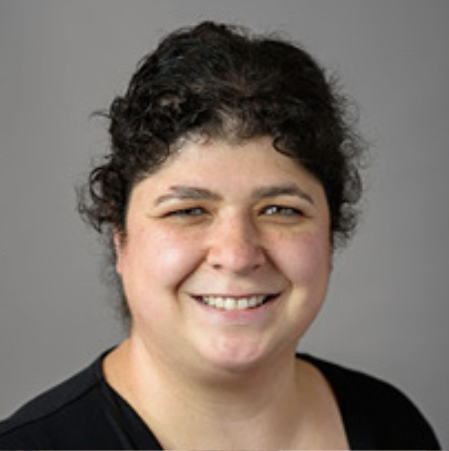
Cirien Saadeh, PhD
Dr. Cirien Saadeh is an Arab-American educator, community organizer, and community-trained journalist who works at the intersections of journalism, social movement development, experiential education, and sustainability. Saadeh has written for local, national, and international publications and is committed to using community journalism and community journalism education to build power in and deconstruct systems of oppression in historically marginalized communities.
Saadeh founded the Journalism of Color Training Center, a community journalism school, community journalism support organization, and soon-to-launch newsroom. She also teaches at Prescott College in the Organizing and Community Justice (MA) and Critical Social Justice and Solidarity (BA) programs and serves as the Department Director for both programs.
Saadeh received her Ph.D. in Sustainability Education from Prescott College in 2019. As part of her doctoral program, she developed a theory, “Journalism of Color,” which asks how we develop sustainable journalism platforms and spaces in historically marginalized communities and create journalism methodologies that build community power and resilience.
Additionally, Saadeh has a Master of Arts in the Humanities, focusing on justice, activism, and solidarity as well a Master of Science in Resilient and Sustainable Communities, both from Prescott College. Saadeh’s community organizing apprenticeship was completed at the Organizing Apprenticeship Project (now Voices for Racial Justice) and through the University of Minnesota’s Center for Urban and Regional Affairs Neighborhood Leadership and Organizing Program. She most recently served on the Board of The Alley Communications, a Twin Cities-based newspaper, and also served on the Board of the Journalism & Women Symposium.
In 2025, Saadeh’s Journalism of Color Training Center launched a non-academic certificate in community journalism in partnership with local newsrooms and in 2026 they will be launching a zine exploring the how-to of anti-racist community journalism, utilizing the Journalism of Color methodology. An open-source anti-racist community journalism handbook and curricular resources is planned for 2027.
Are you interested in being part of our community?
One thing we all have in common is our passion – passion for helping others, passion for the environment, passion for social justice and a passion for a different kind of learning experience.