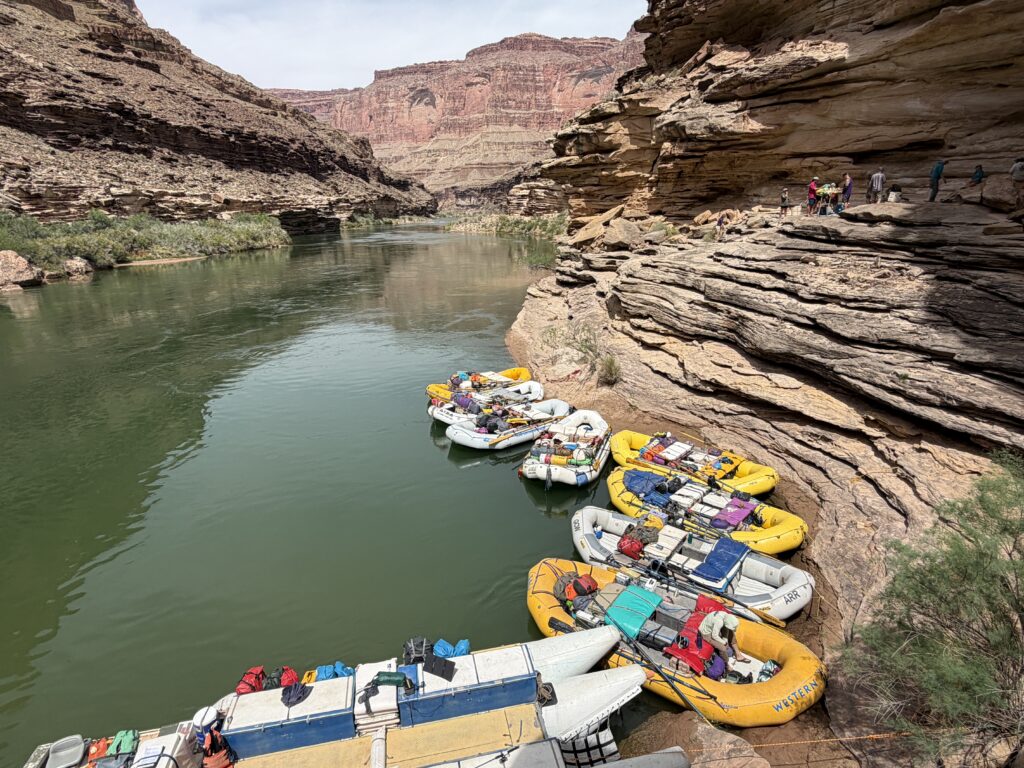
Prescott Alumni Serve As Topical Speakers at Grand Canyon River Guides Training Seminar
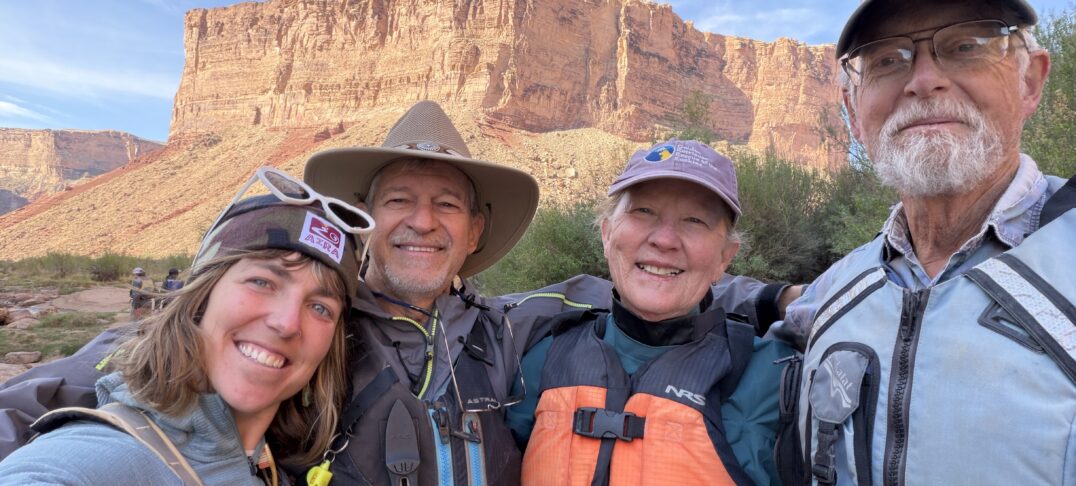
This past Spring, Dr. Joel, Barnes ’81 and Dr, Larry Stevens ’75 were topical expert speakers at the annual 2026 Grand Canyon River Guides Training Seminar (GTS), sponsored by Grand Canyon River Guides. During the Land Session they presented on their recent field work and research on the importance of springs in Grand Canyon and their connection with tributaries. The Land Session was attended by a number of PC alum, including Justin Salamon, Gibbey Simeon, Peter Lefebvre, Brad Dimock, and Paul Lauk.
During the River Session, Joel and Larry presented on a variety of topics related to experiential education, regional ecology, and resource management issues. They also shared their experience and knowledge regarding the whitewater rafting skills and techniques. Another PC alum, Nancy Brian,, a former botanist for GC National Park, was also a speaker on the GTS River Session, sharing with the guides her in-depth knowledge of plant ecology and natural history in Canyon.
The group of GC river guides on this training trip included four PC alum – Liam O’Niell (trip leader), Bec Kates, Angelica Cronin, and Brennah Latchford.
Bec Kates authored the following article for Boatman’s Quarterly Review about the recent 2026 Grand Canyon River Guides Training Seminar (sponsored by Grand Canyon River Guides).
On April 1st, the Guide Training Seminar was greeted with cloud cover and rain as we woke up at Lee’s Ferry. With a sigh of relief and much anticipation we headed down river with the onset of spring finally upon us. This year’s GTS was hosted by AzRA and led by Liam O’Neill. There was representation of guides from AzRA, CANX, GCE, ARR/GCW, OARS, OU, Western, and Wilderness. We were joined by our upper half experts and speakers Nancy Brian, Sonwai Wakayuta, Mervin Yoyetewa, Joel Barnes, Larry Stevens, Kat Cooney, and Sarah Morton. Now, more than ever it’s important to remember GCRG’s mission statement, “to preserve, protect, and defend the Grand Canyon, the river, and the magic it bestows on us all while respecting all those living in and around it.” As our GTS experts and speakers freely share their knowledge it can help us ground into a sense of place, deepen our respect for the sacred cultural landscape, and build active stewardship. Guides hold social power, building understanding and advocacy through dialogue with our passengers to carry that mission forward.
Early in the trip, Joel Barnes led a conversation on the interconnected layers that make up the landscape. We talked about fault lines in geologic terms, then built on that with the history of human travel through them, layering stories into a more complete understanding of the canyon, with the hydroscape at its center. Other notable talks included Sonwai and Merv describing their connection to the Little Colorado River, Nancy’s geomorphology and how rapids are formed, and Kat educating us on water quality gauges and how to access their data.
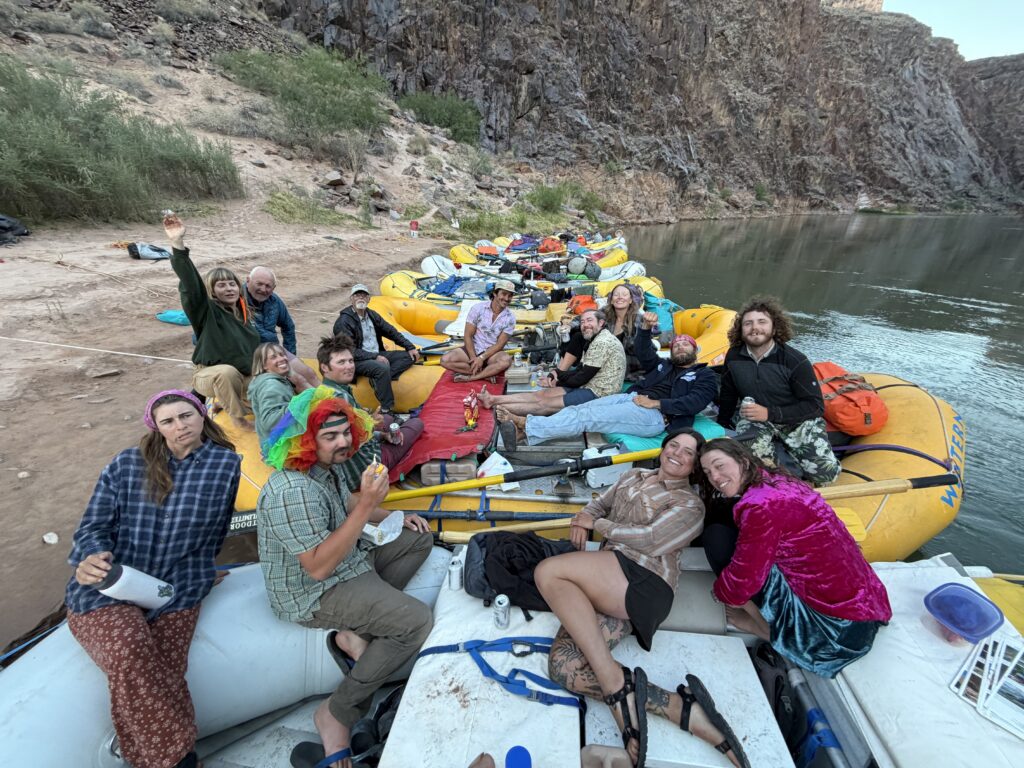
While the majority of the GTS guides were familiar with Grand Canyon, we had plenty of new rowers getting a feeling for the oars. Confidence grew mile by mile and through the Roaring Twenties. Moving downstream more flowers were in bloom and it was hard to not see the parallel of their growth and ours. Low water is intimidating, technical runs with crunchier waves but at the Hance Rapid scout something felt different. Feeling only slightly more relaxed, it became clear how unique the GTS space is. One that welcomes questions, shared knowledge, and uncertainty. Together, finding new ways to go with the flow.
The clouds and rain, which first felt like a gentle welcome, took on a new sense of adventure as we entered the Upper Granite Gorge. Finally, we pulled into Mule Dust sharing stories of good runs and “good-enough” runs. That night, Sarah from the Whale Foundation, told us the story of Curtis Hansen and how the foundation was created by guides for guides and how they were able to come together in a difficult time. She emphasized that the foundation exists to support guides in their well-being, growth, and life beyond the river. The next morning we said goodbye to ten new friends and hello to eight new faces including Colorado River expert, Jack Schmidt, and Sterling Selana from the Hualapai tribe.
While spirits were high and confidence growing, pushing off from the exchange with a low water Horn Creek in front of you is always daunting. It’s hard to accept in these unprecedented times of water in the West that low water Horn Creek is more likely than not, a new normal. But while intimidating, low water can make us better boaters. It’s a vulnerable thing to say, “I don’t know” and stay open to new ideas. As our trip floated closer to Horn Creek, we were all crowd-sourcing new information and some scouting. All ten boats tried the right to left run and nine made it through upright. One, bouncing off the right horn and was thrown into the right wall. With an impressive response from the crew everyone was efficiently picked up and physically unharmed. Of course, it’s always the poop boat! Facing adversity like this can change the atmosphere of the group and we chose to be resilient, coming together to right the boat and debrief the event. We acknowledged this can and will happen to any of us. Low water can make us more compassionate guides.
The next morning we added to our layers of what make up a landscape with Jack Schmidt giving us an overview of the Colorado River from its headwaters and tributaries in four different states and two different countries. I thought of Merv and Sonwai describing sacred waters of the LCR connecting Jack’s talk; all these waters flow downstream together. We finished up the Upper Granite Gorge in style. Clean lines, lots of learning, and camped somewhere other than Bass. Joel Barnes is a college professor at heart and made sure we had homework throughout the day. Giving us readings about Wild and Scenic Rivers and how they apply to Grand Canyon. Merv generously sharing the complex issues the Hopi people face and their resilience. Many common stops were viewed through a light of Sterling’s talk of cultural awareness and identity. We had cultivated an environment of shared learning and practice; we were blooming as rowers pink and sun-kissed as the cactus flowers. With a much-anticipated Bedrock and Deubendorf Rapid day, every boat, new and experienced, exploded in cheers as all ten boats ran perfect right lines in both rapids. And so did the Canyon, for the next three days the wind howled upstream. Resilience is a choice we have to make and easier done with the help of others. We busted out a few thirty mile days switching out rowers to rest and eat. The future of low water is pack lunch.
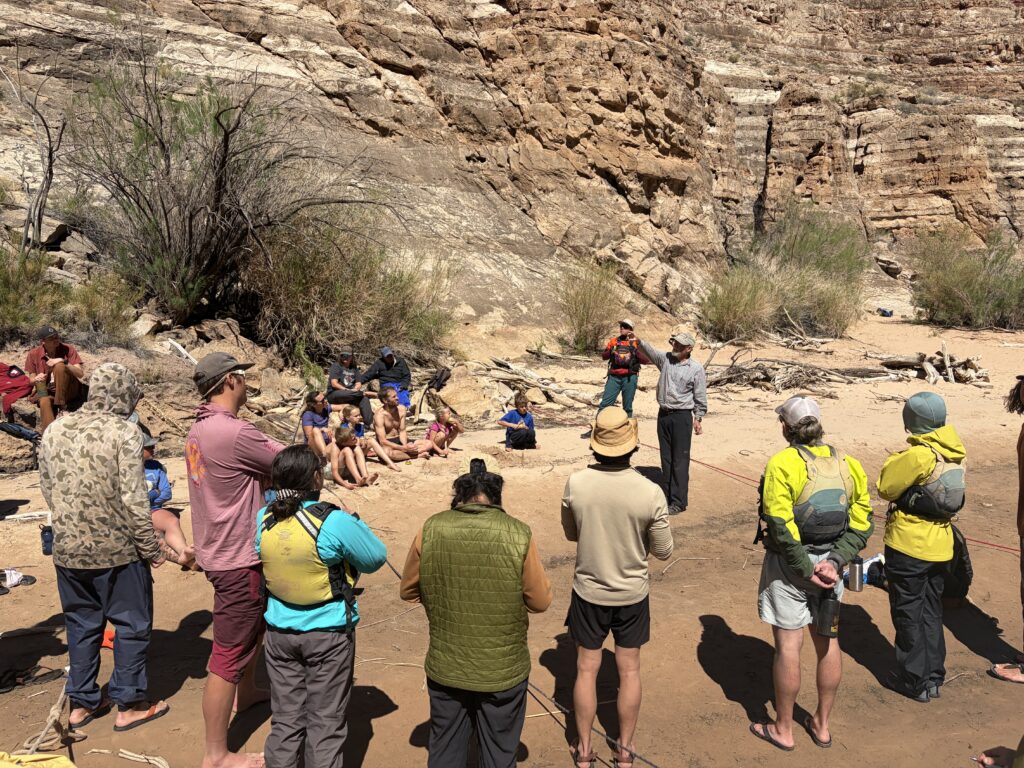
Paul Dohm from the Adopt-A-Beach program came downstream with us to document a baseline for the year. He recorded the expected and glaringly obvious – loss of beaches in the Grand Canyon. Please check out his article in this BQR for his AAB field observations. “Our camping beaches are a critical resource for many, being affected by upstream decisions. Photographing these beaches is another way to document the health of the river corridor and can give context that can be used to make those decisions. A way for guides to help advocate,” says Paul.
In times when the future feels uncertain, it’s easy to imagine the worst. But uncertainty can also create space to imagine something better. Jack’s closing talk offered us a chance to dream of how we want to see the Colorado River. We all dreamt of similar futures, a healthy landscape, the ecosystem and the people living in it. It’s a motivating feeling to realize how powerful we can be with a shared dream. Jack left us questioning our own political involvement as guides and what our responsibility is to this breathtaking landscape. It was hard to say goodbye to the trip, it almost always is. This time we were driving away at Pearce Ferry with the understanding and anticipation that we would get to see each other again, all season. Either obnoxiously waving and yelling from boat to boat or if we were lucky, sharing a few moments on a limestone patio or next to a waterfall to chat and catch up.
Going with the flow doesn’t mean being passive, it means adapting to new environments and choosing resiliency. The GTS offers a place of growth and learning, to dream of how we want to see the Colorado River. As we floated downstream and watched the flowers turn to seed, so too did the ideas we planted begin to take root. This landscape has always been resilient. The question is how we choose to be within it.
While these are unprecedented times, we can walk into the unknown together.