Exploring a Career in Expressive Arts Therapy
Art has a way of peeling back the external self and shedding light on what someone is really feeling. In the 1940s, the formal practice of art therapy began, and it’s been helping people understand their mental health struggles ever since.
Whether it be trauma, depression, or anxiety, art therapists can help guide people toward communicating their feelings where words are not enough.
In this article, we’ll discuss everything you need to consider about getting a certificate in Art Therapy.
What is an Art Therapist?
An art therapist helps people express their emotions and work through mental health issues by employing art. Art therapists guide clients through art projects and use the art to better understand what they’re experiencing.
Roles of an Art Therapist
Therapists who specialize in art therapy are responsible for facilitating healing and self-discovery through various kinds of art. Some of the roles and responsibilities associated with art therapists are:
- Facilitating creative sessions
- Developing treatment plans
- Document progress
- Build relationships
- Help patients interpret art
- Work with other mental health professionals to develop treatment
What Kind of Art do Art Therapists Use?
Art therapists are often multi-disciplinarians, meaning they can engage with various mediums of art. The kinds of art expressive art therapists use include:
- Coloring
- Drawing
- Doodling & scribbling
- Finger Painting
- Collages
- Photography
- Sculpting
- Painting
- Dancing
- Creating music
- Drama
- Writing
Expressive arts therapy has a wider scope than typical art therapy.
Careers Available for Art Therapists
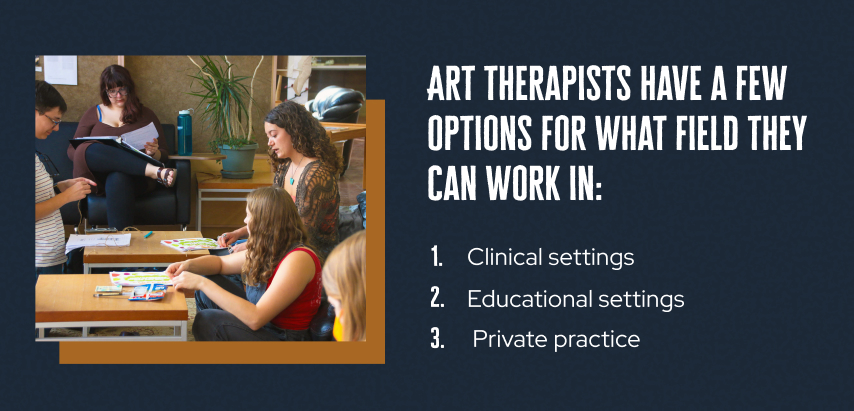
There are more jobs available for Art Therapists than you might realize. The career opportunities in this field can take you to many emphases, locations, and niches.
Clinical Settings
Hospitals and wellness centers often offer art therapy as a part of a holistic treatment program. Art therapists who work in these settings often see many patients and are a part of their patients’ care team.
The patients in these settings are often struggling with chronic illness, trauma, and other mental health issues.
Private Practices
Art therapists in a private practice are more flexible than those in a clinical setting. They can set their own hours and work location, but have to build their clientele list and run their own business.
If you aren’t keen on running your own business, you can join a pre-existing private practice. You may not have as much flexibility as you would have as a business owner, but you’ll still be able to guide your own path.
Schools and Universities
Art therapists who work in schools help students work through difficult emotions. Children in K-12 schools have diverse needs. Many of these children have a hard time communicating and processing how they feel. Art therapy can help give them a voice.
College students are similar, and many universities and colleges provide art therapy services to increase the wellbeing of their students.
Should I Get an Expressive Arts Therapy Certificate?
Art therapy is a career for people who want to use their creativity and interest in art to help others heal. However, it’s not just painting.
An art therapist is still responsible for recording documentation, organizing charts, and reviewing treatment plans. And not every session will involve creating art. Some sessions will just involve talking with clients.
You’re Passionate About Helping Others
A therapist is someone who helps others by providing treatment for mental, emotional, and behavioral issues. They help people develop coping skills for stress and negative emotional responses.
Therapists work closely with people, and therefore should have a passion for working with others and helping them work through mental health issues caused by social injustice, trauma, brain chemistry, and inherited traits.
You’re Passionate About Art
A passion for art is what draws many people to work as art therapists.
If you’re a person who loves creating, talking about, and thinking about art, then you fulfill half of the necessary passions for becoming an art therapist.
How Do I Get Into Expressive Arts Therapy?
To become an art therapist, you need an undergraduate degree, a master’s degree, and professional credentials.
Get Your Undergraduate Degree
An undergraduate degree is a requirement for Master’s degree programs. The emphasis of the degree should be related to art therapy, which includes degrees that cover fine arts and psychology.
The degree program should include training in:
- Art creation process
- Psychoeducation
- Research methods
- Psychology
- Psychodiagnostics
Your undergraduate degree should be in a related field to art therapy counseling.
Get A Master’s in a Related Field
You can get a master’s degree in art therapy, but a degree in a related field will be just as valuable.
A Master’s in Counseling, Psychology, or a related field is recommended. At this point in your educational journey, you’ll want to choose a program you know will provide the required credits for becoming an art therapist. It’s important to talk with an admissions counselor or career professional to make sure you choose the right program.
Receive Your Credential
The final step is the credentialing process. It’s here that you’ll dig deep into expressive arts therapy.
A credential program will prepare you for a professional career in expressive arts therapy through supervised clinical work and coursework.
The Expressive Arts Therapy graduate certificate from Prescott College prepares students to pursue registration as an Art Therapist (ATR) through the Art Therapy Credentials Board or registration as an Expressive Arts Therapist (REAT) through the International Expressive Arts Therapy Association.
Apply today and begin your journey toward a fulfilling career as an art therapist.
Start Your Journey With Prescott College
Prescott College has all the programs you need to start your career in Arts Therapy, including a certificate program that can be taken concurrently with a master’s in counseling program.
Start your educational journey toward becoming a certified art therapist by applying today.